The most expensive lie in marketing
By Dustin Martin
A piece landed in my feed recently that stopped me mid-scroll. Michael Farmer, a veteran advertising strategist, published a devastating analysis of what digital advertising has actually done to the world's biggest brands over the past fifteen years. His conclusion is uncomfortable reading for anyone who has spent the last decade confidently shifting budget toward programmatic and social. Farmer asks the question almost nobody in those rooms asks: is it actually working? Not "is it generating impressions?" or "is the CTR up?", but the only real question that should matter to a business: are you growing?
The growth that disappeared.
In the fifty years from 1960 to 2010, the world's great FMCG brands – P&G, Unilever, Nestlé, Colgate-Palmolive – grew at roughly 8% compounded annually. P&G alone went from $1bn to $79bn in revenue. This was the era of mass media. Television. Radio. Outdoor. Advertising that was felt, not tracked.
Since 2010, as digital and social came to dominate the media mix, those same companies have grown collectively at under 1% per year. Less than half the rate of the US economy. The biggest advertising spenders in the world – the companies with the best agencies, the most sophisticated data stacks, the largest martech investments – have essentially stopped growing their brands. And yet the spend kept flowing.
Where did the money actually go?
According to the Association of National Advertisers (ANA), just 36 cents of every programmatic dollar reaches an actual consumer – a finding that aligns with what many South African advertisers are now uncovering when they interrogate their own supply chains more closely. The rest disappears into a cascade of intermediary fees, verification costs, and what the industry politely calls "made-for-advertising sites" – domains that exist purely to harvest ad budgets with no human ever meaningfully engaging with the content.
Twenty-nine percent gone to adtech transaction costs. Thirty-five percent to unmeasurable or fraudulent environments. The platforms got rich. The intermediaries got rich. The consultants promising to navigate the complexity got rich. The brands? They got older.
The cruel irony is that programmatic advertising was supposed to be the great efficiency play. In practice, the system has been gamed so thoroughly by so many layers of infrastructure that the advertiser is almost always the last person in the room.
Programmatic done properly.
The core promise of programmatic – smart, data-driven, automated buying – is genuinely valuable. The problem was never the idea. The problem is the ecosystem it spawned: a Byzantine chain of intermediaries, each taking a cut, collectively consuming the majority of the budget before a single impression is served to a real person in a real environment.
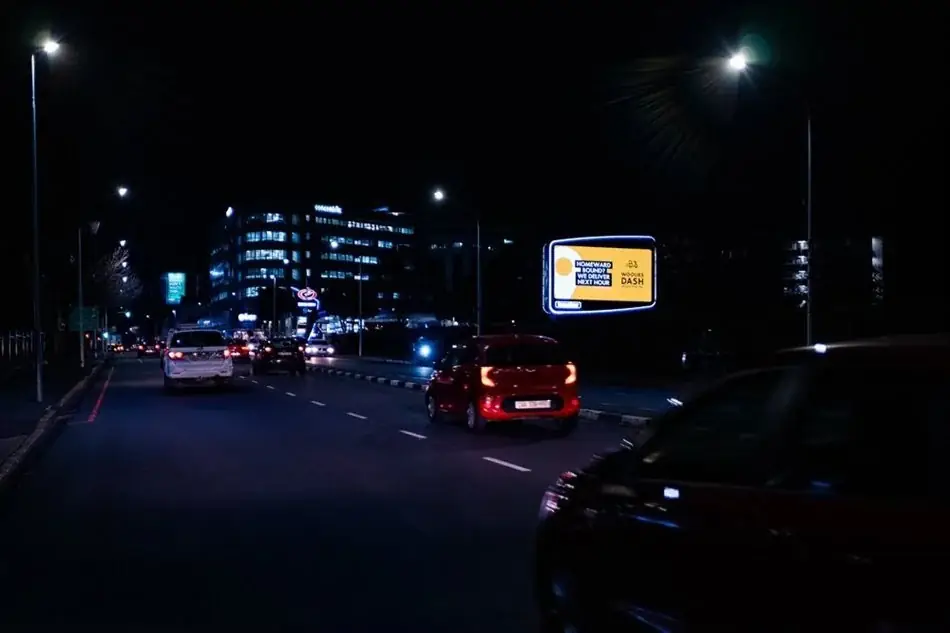
What if you could keep the intelligence and eliminate the waste? That's the argument for programmatic digital out-of-home (pDOOH) media and specifically, for buying it directly from the media owner. When you buy pDOOH through a direct owner relationship, you get the targeting sophistication that programmatic promises – dayparting, audience triggers, contextual relevance, real-time campaign management – without the adtech waterfall bleeding your budget dry. No DSP margin. No SSP margin. No MFA inventory. No fraud. Every rand goes toward a real screen, in a real location, seen by a real person who chose to be there.
The environment matters enormously. A premium DOOH network isn't a pop-up ad chasing someone across the internet. It's a brand showing up in the spaces where consumers live their lives – commuting, shopping, socialising, travelling. The attention is ambient but genuine. The brand safety is absolute. And the context is one that consumers associate with quality, not intrusion.
The reckoning is here.
Marketing mix modelling (MMM) is having a serious renaissance, and the findings are challenging the orthodoxy. When CMOs ask hard questions – "what would happen to our business if we cut all programmatic display spend?" – the answers are often startling. Much of what programmatic "delivers" was going to happen anyway. It's correlation dressed up as causation, and it's cost the industry billions.
"DOOH, by contrast, consistently outperforms its budget allocation in MMM studies. It builds brand equity in ways that performance channels cannot replicate."
Dustin Martin, Head of Programmatic, Tractor OutdoorDOOH, by contrast, consistently outperforms its budget allocation in MMM studies. It builds brand equity in ways that performance channels cannot replicate, and with the direct programmatic model now mature enough to offer genuine flexibility and scale, the efficiency argument – once digital advertising's trump card – now belongs to a different medium entirely.
What I'd say to every CMO reading this.
The companies that win the next decade of brand-building will be brave enough to ask not "how do we optimise our digital spend?" but "are we spending in the right places at all?" The answer to that question increasingly points toward pDOOH, bought directly and transparently from owners who have skin in the game and screens worth showing up on. The most expensive lie in marketing isn't that digital doesn't work. It's that programmatic has to mean wasteful. It doesn't. But you have to know where to buy it.