2026 will redefine how digital billboard networks are built and powered

Digital billboards are an inescapable part of our urban landscape, lighting up highways and malls alike. As more of them go up, we have to plan digital infrastructure that's more resilient by design. This year will build on the momentum of last year, with the focus shifting from putting up screens to making sure the infrastructure behind them can keep pace.
Keeping digital networks powered is now a practical priority.
Grid reliance has become a real constraint for roadside digital networks, and the pace of change over the past year shows how quickly the industry is responding. Solar integration across live sites has already lifted solar contribution from around 5% to as much as 50% of total power requirements, easing pressure on the grid and improving uptime.
This shift is playing out in how network owners plan for growth. As noted by a Glynt executive: "Reducing our dependence on the grid has become critical while still delivering large, high-impact screens in premium locations." As these networks continue to expand, energy resilience is moving from a technical add-on to a baseline design requirement.
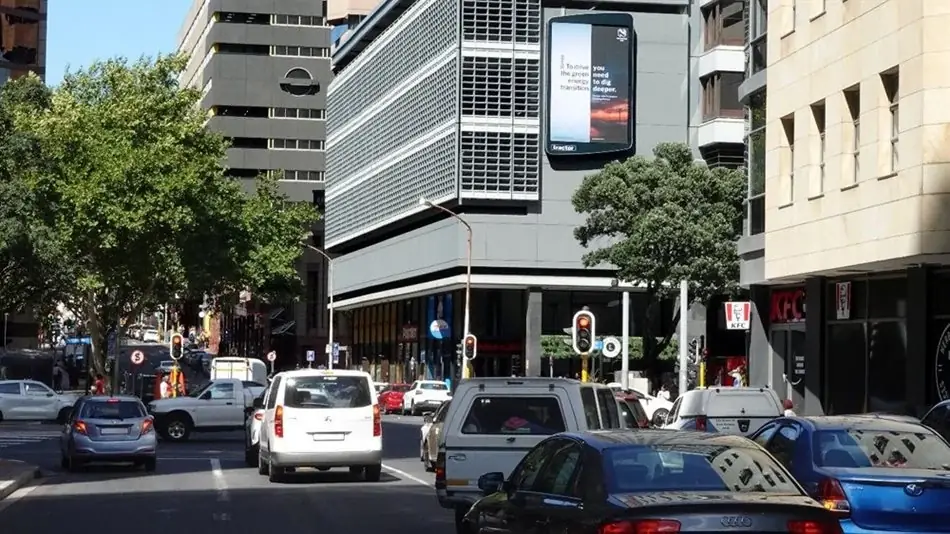
Large-format outdoor still anchors premium locations.
Large outdoor screens are still where brands want to be seen in busy urban areas, and recent installations on Bree Street and Long Street in Cape Town's CBD point to continued growth in 2026. As networks expand, these premium locations – offering excellent visibility in busy lifestyle and commercial precincts – will continue to anchor large-format digital. The difference now is that these screens are being planned as part of more resilient networks, with infrastructure designed to support performance over time.
Indoor environments are moving beyond traditional TVs.
Inside buildings, large-format LED displays are increasingly replacing traditional TVs in busy environments like reception areas and shared corporate spaces. The draw is simple: these screens are larger, brighter and built to be seen from further away, which changes how information and brand messaging land. And since LED displays can be built to fit the exact size and shape of a space, they feel like part of the architecture rather than something bolted onto a wall.
Another drawcard is that content is managed remotely across multiple locations, which makes it far easier to keep messaging current without sending people site to site to update screens. Commercial-grade LED is built to run for longer and holds up better over time than consumer TVs – screens fail less often so hardware doesn't have to be replaced or fixed as frequently.
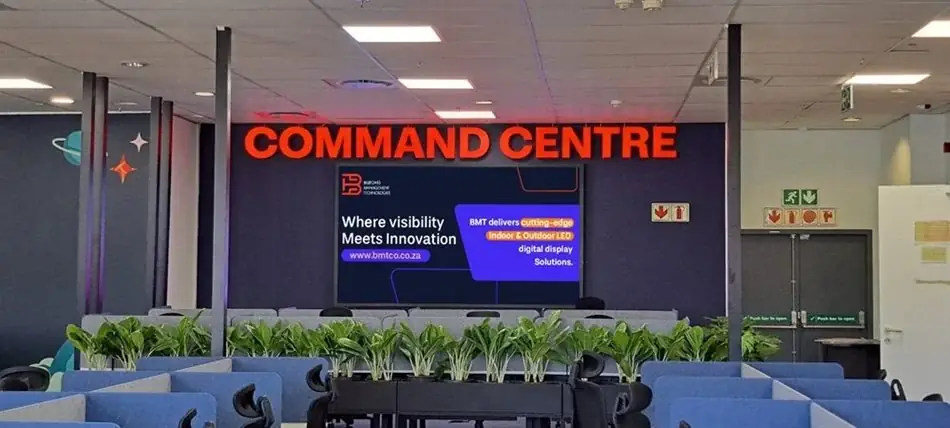
What to expect in 2026.
BMT's 2026 priorities are about scaling responsibly, embracing sustainability, expanding partnerships, and delivering smarter digital solutions that align with how people live, work, and engage today. The practical focus centres on building digital networks that can scale without becoming harder to power and maintain. That starts with continuing the rollout of solar and energy-efficient retrofits across roadside digital.
The organisation is also expanding large-format outdoor digital in high-traffic, high-visibility locations, backed by smarter monitoring and more energy-efficient technology. On the commercial side, digital signage is extending into more forecourt networks. Indoor digital represents another major growth area this year, with clients increasingly wanting one connected system that brings screens, content and monitoring together. What comes next will be defined less by scale and more by reliability and intelligent design.